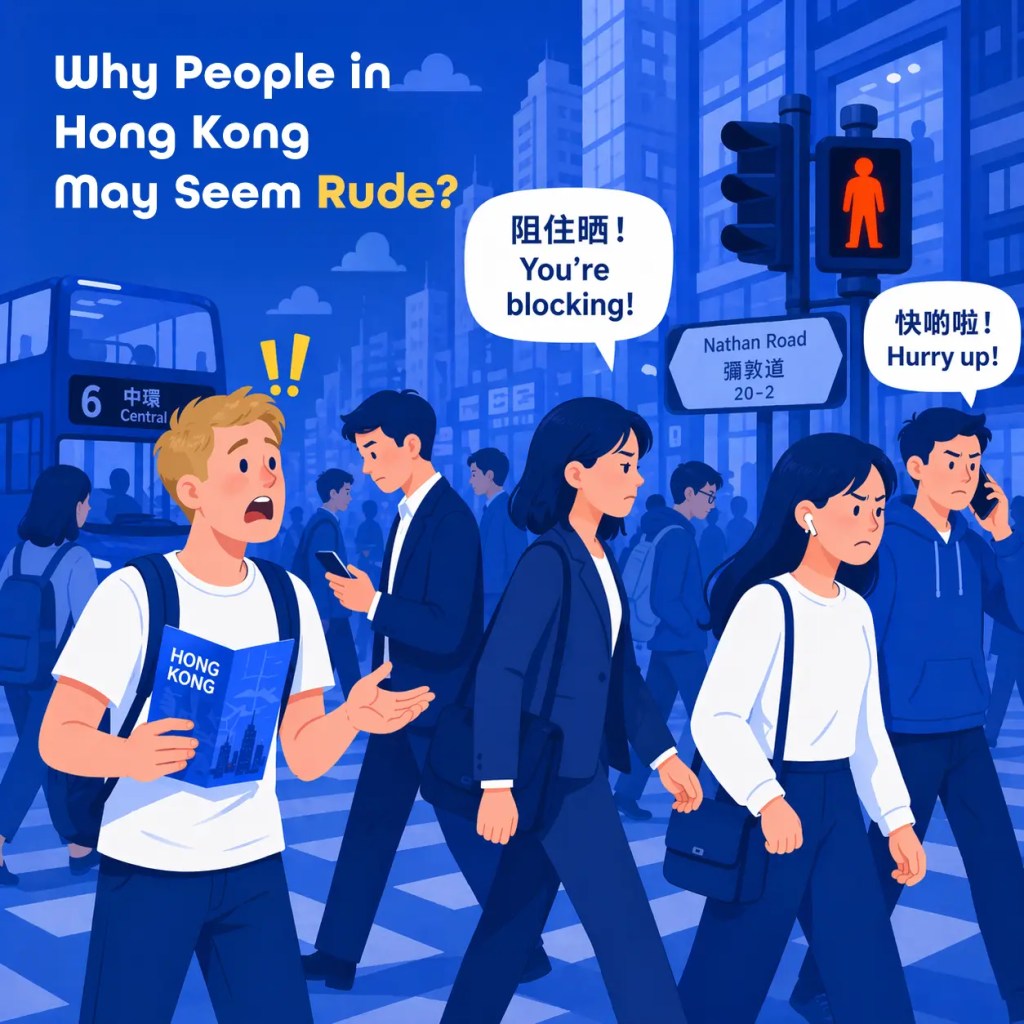
Why People in Hong Kong May Seem Rude: A Local Perspective for Non‑Cantonese Speakers
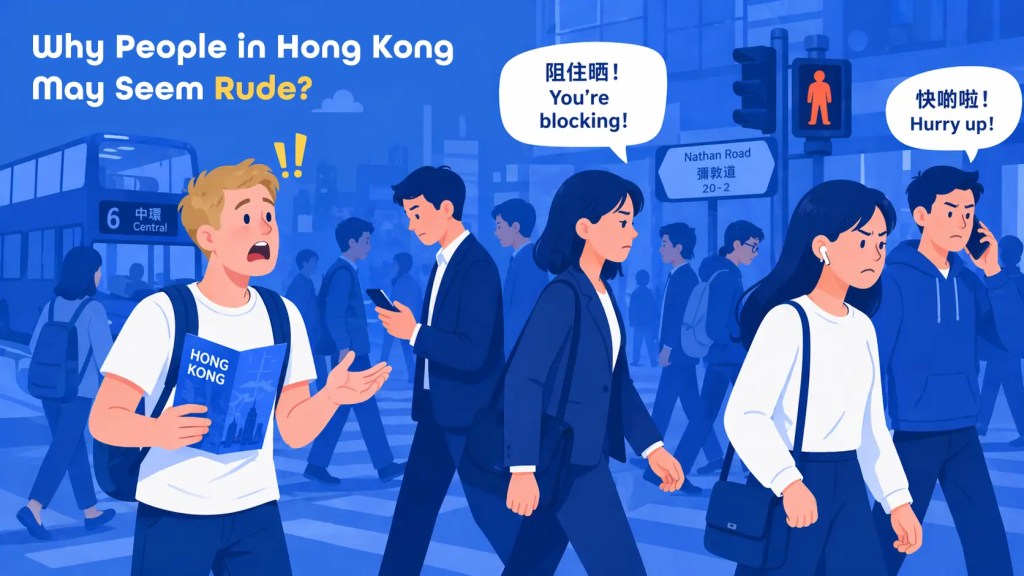
If you’re a foreigner living in or visiting Hong Kong – an expat, newcomer, or curious traveller – you may have experienced:
- Cashiers who don’t say “hi” or “bye”
- People bumping into you on the MTR without apologising
- Locals speaking loudly or using words that sound aggressive
- Very little small talk, eye contact, or smiling at strangers
From a foreigner perspective, this can easily feel “rude.” But in most cases, Hongkongers are not being hostile – they’re following a different set of social rules shaped by efficiency, space, language, and history.
This article explains, from a local point of view, why people in Hong Kong may appear rude and how to interpret their behaviour more accurately, so you can enjoy the city – and its people – much more.
Understanding Hong Kong Through a Local Lens
Why Hong Kong Behaviour Can Feel So Different

- Efficiency over politeness formulas
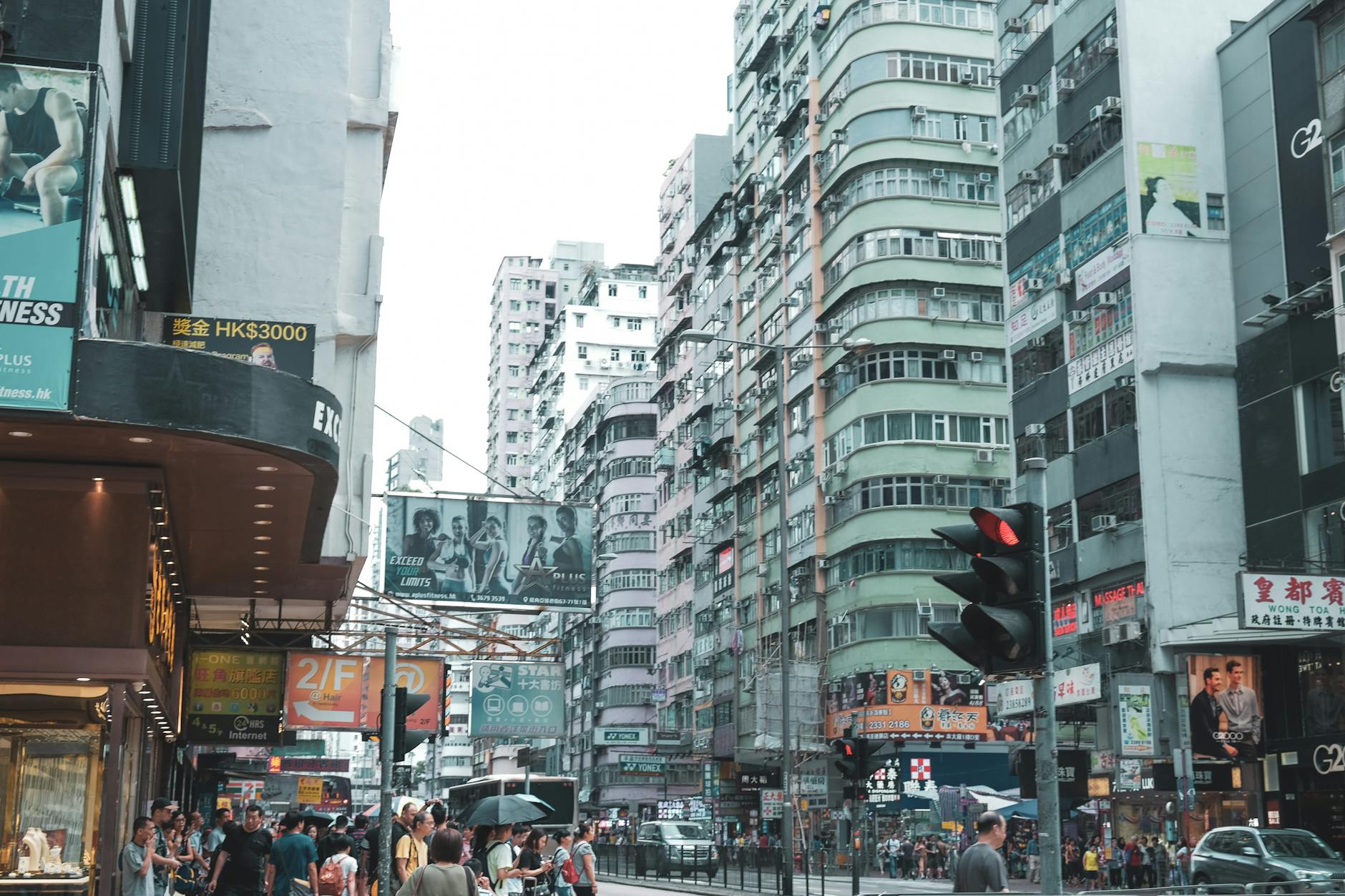
In Hong Kong, especially in busy areas like Central, Mong Kok and Tsim Sha Tsui, people value speed and getting things done more than saying “hi”, “please” and “have a nice day”.
- Extreme crowding shapes daily manners
On the MTR, in lifts and narrow streets, bumping, rushing and standing very close are normal – not automatically considered rude.
- Cantonese sounds intense to non‑speakers
The loud, fast, tonal nature of Cantonese – plus casual use of swear words – can make normal conversations sound like arguments.
- Little small talk, eye contact or smiling at strangers
Cashiers, waiters and commuters often keep a neutral face and minimal eye contact to protect their own emotional space in a crowded city.
Efficiency Culture – Why Hong Kong People Seem So Direct

Time Is Money in Hong Kong
Hong Kong is a fast-paced global financial hub. Many locals work long hours, have tight schedules, and live far from their workplace. This creates a culture where:
- Speed is valued more than politeness formulas
- Short, direct communication is seen as professional and efficient
- Lingering or chatting can feel inconsiderate to the next person waiting
For example:
- At restaurants, staff may take your order quickly, speak in short phrases, and drop the bill on your table before you ask. This isn’t a signal to “get out,” it’s a way to help you pay whenever you’re ready and free up the table for the next customer.
- In shops, staff may not ask, “How are you today?” or say, “Have a nice day.” They’re focused on processing payments and serving the queue as quickly as possible.
Short, Direct Communication vs. Politeness Formulas
In some cultures, politeness is shown with soft language and lots of “please” and “thank you.” In Hong Kong:
- Being clear and efficient is a form of respect – it saves everyone time.
- Overly soft language can feel fake, overly formal, or “trying too hard.”
So what feels like “cold efficiency” to an outsider often feels like normal, neutral, everyday behaviour to locals.
How Expats Can Interpret This Behaviour
- Tips: don’t take briefness personally, look for efficiency as “politeness”
Crowded and Dense Living – Surviving in a Limited Space City
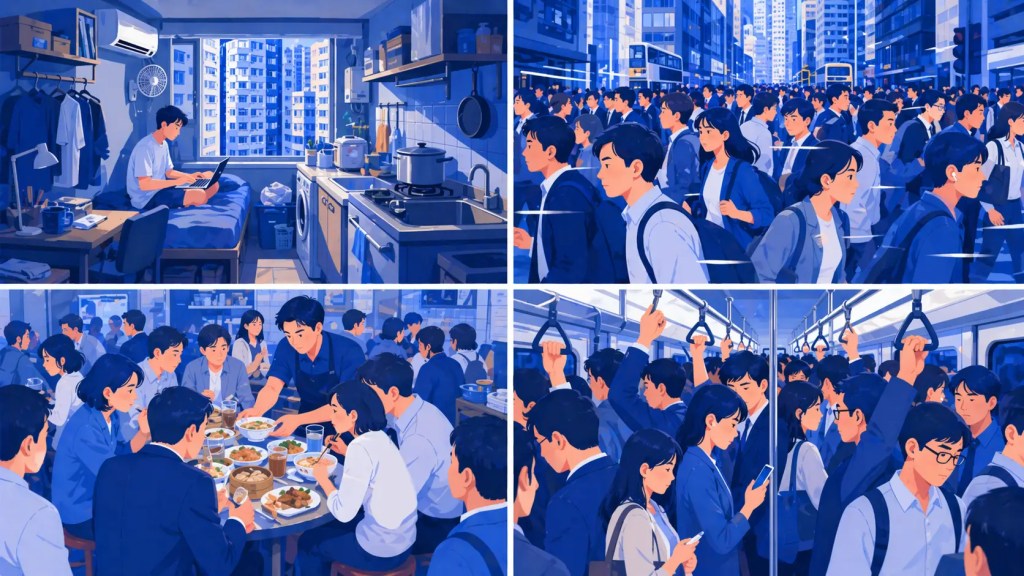
Life in One of the World’s Densest Cities
Hong Kong is one of the most densely populated cities in the world. That affects behaviour in very practical ways:
- Apartments are small; public space is shared by many.
- MTR trains, buses, lifts, and walkways are often crowded, especially in areas like Central, Mong Kok, Causeway Bay, or Tsim Sha Tsui.
- People learn to move quickly and minimise friction.
In this environment:
- Bumping shoulders, brushing past, or standing very close is normal.
- People may not apologise for minor contact because it happens constantly and is not considered offensive unless it’s clearly intentional or very rough.
Emotional Distance as Protection, Not Rudeness
When you are constantly surrounded by strangers, it’s natural to:
- Avoid eye contact
- Put on a “neutral face”
- Keep interactions short
This emotional distance is a way to protect personal space in a city where physical space is limited. To someone from a more spacious or “friendly stranger” culture, that can feel like coldness – but it’s often just self-preservation.
The Sound of Cantonese and Everyday Foul Language

Why Cantonese Can Sound Angry to Non‑Speakers
- Tonal language, sharp sounds, high energy speech
Swear Words Used Casually in Daily Life
- Foul language as emphasis, joking among friends
In reality, many locals are just speaking normally – or joking with friends.
Swear words in daily speech
Hong Kong Cantonese uses foul language more casually than some cultures:
- Certain swear words are used as fillers or to add emphasis.
- Friends may curse at each other affectionately or jokingly.
- It doesn’t always signal real anger or disrespect.
From the outside, hearing strong words in a loud tone can feel hostile. From the inside, it’s often a style of expression, not an attack.
No Small Talk, No Eye Contact, No Greeting Culture

Different Expectations of “Politeness”
In many English-speaking countries, it’s polite to ask: “How are you?” “How’s your day?” “Good morning!”
In Hong Kong:
- These phrases are not part of everyday Cantonese culture.
- Staff may simply say: “Next.” “What do you want to eat?” “Octopus or card?”
- Ending with “bye” or “have a nice day” is not standard in most local shops.
This can feel rude if you expect small talk and eye contact. To locals, it’s:
- Normal, neutral, and efficient
- Not unfriendly – just not wordy
Eye Contact and Smiling: What They Mean in Hong Kong
Avoiding eye contact can be:
- A sign of shyness, habit, or focus on the task
- A way to reduce social pressure in crowded places
In Hong Kong, looking directly into someone’s eyes for too long can feel too intense or confrontational. So:
- Cashiers might look at the items, not at you.
- People on the MTR look at their phones, not other passengers.
This is rarely meant as an insult – it’s how people coexist in close quarters without making each other uncomfortable.
A Local Point of View – How Hongkongers See Themselves
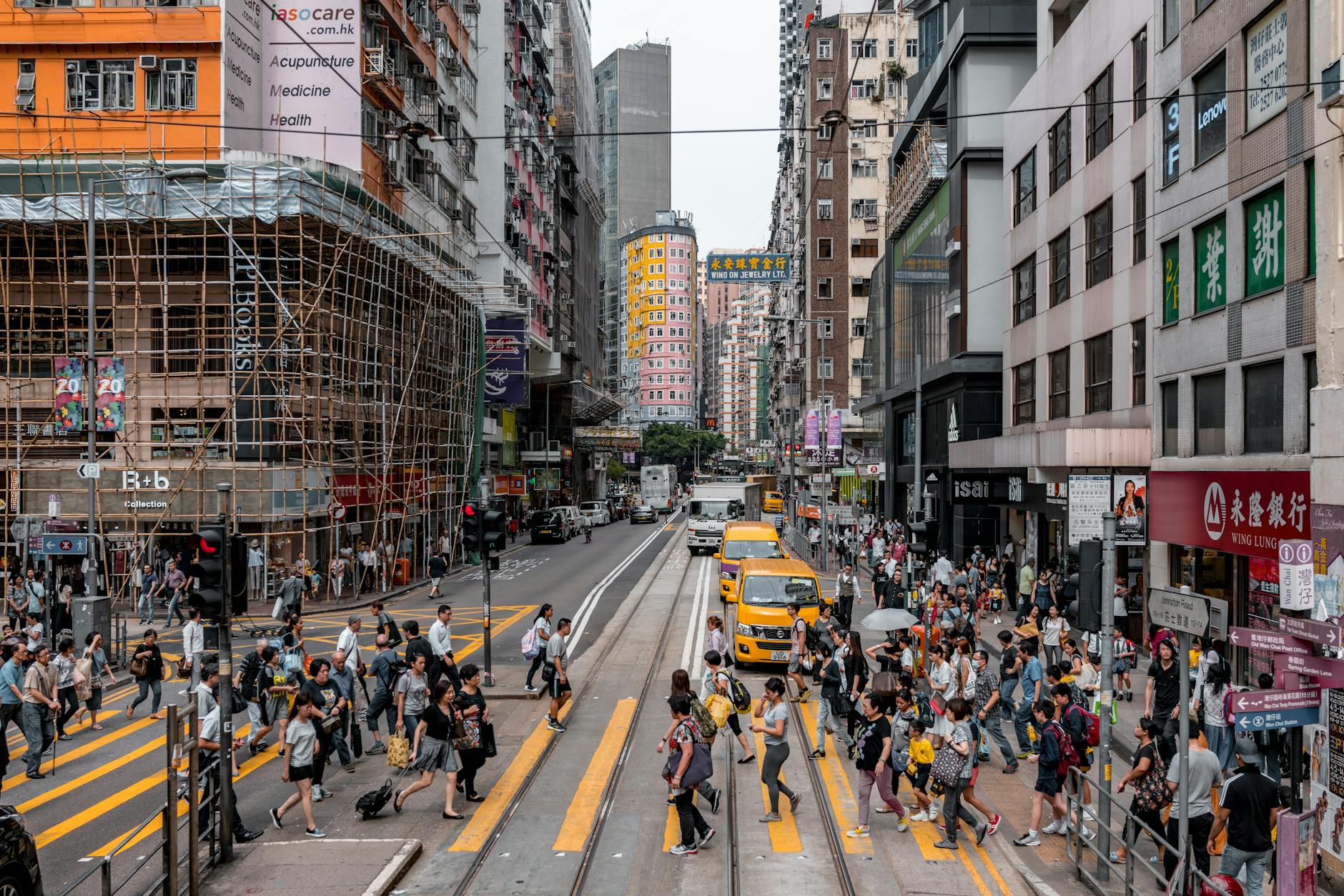
From a local perspective, most Hong Kong people see themselves as:
- Hard-working – long hours, multiple jobs, or side hustles
- Pragmatic – focused on results, not on “sugar coating”
- Helpful when needed – many locals go out of their way to give directions or help if you ask politely
- Straightforward – they “say it as it is” rather than wrapping things in polite phrasing
Many locals are surprised to hear that foreigners find them rude. They might say:
- “We’re just busy.”
- “I don’t know how to say it nicely in English.”
- “Why waste time with so many words?”
Understanding this mindset helps you see that most “rude” moments are actually cultural mismatches, not personal hostility.
Real Rudeness vs. Cultural Style: How to Tell if Someone in Hong Kong is Actually Angry
Since loud volume and casual swearing are normal in everyday Cantonese, how can foreigners tell the difference between friendly banter and genuine hostility? The secret is looking past the decibels and focusing on non-verbal cues.
Watch for these four signs of actual anger:
- Aggressive Posture: Friends joking loudly remain relaxed. If the loud speech includes pointed fingers or invading your personal space, it has crossed into real anger.
- The “Black Face”: True annoyance is usually paired with a hard stare or what locals call “black face” —an intensely dark, unsmiling expression.
- The Sudden Silence: Surprisingly, absolute fury in Hong Kong often manifests as a sudden, cold drop in volume or the silent treatment, rather than shouting.
- Out-of-Place Context: Shouting across a busy cha chaan teng (local diner) is standard. But if a stranger directs intense, unprovoked frustration explicitly at you, it’s real rudeness.
The Takeaway: Don’t just listen to the volume—read the room. If the body language is relaxed, you are likely just hearing the vibrant soundtrack of the city.
Practical Tips for Expats, Newcomers and Tourists in Hong Kong
To navigate Hong Kong culture more smoothly:
1. Don’t take briefness personally
Short answers, lack of smiles, or no greetings usually mean nothing about you. It’s just how things are done.
2. Match the pace
Have your Octopus card or payment ready, decide your order before reaching the counter, walk with purpose – you’ll blend in more easily.
3. Ask for help directly
If you’re lost or confused, politely ask:
- “Sorry, could you help me?”
- “Excuse me, how do I get to [place]?”
Many locals will gladly help, even with limited English.
4. Learn a few Cantonese phrases
Simple words like:
- “M Goi” (唔該) – please / excuse me / thank you (for service)
- “Do Ze” (多謝) – thank you (for gifts)
These show respect and almost always soften interactions.
In the article of “M Goi vs Do Ze: Cantonese Thank You Phrases in Hong Kong“ , you’ll learn how each of these phrases works in real life.
5. Adjust your expectations of “good service”
Instead of expecting warm small talk, look for:
- Speed
- Accuracy
- Practical help
That’s what “good service” usually means in Hong Kong.
Living in Different Parts of Hong Kong: Small Cultural Nuances
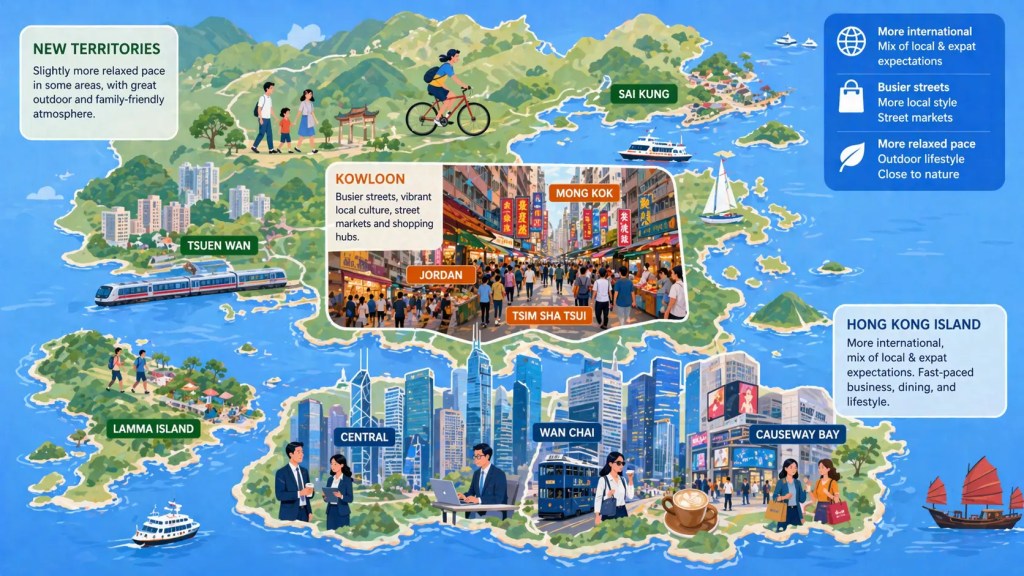
Hong Kong Island (Central, Wan Chai, Causeway Bay)
- More international, mix of local and expat expectations
Kowloon (Tsim Sha Tsui, Mong Kok, Jordan)
- Busier streets, more local style, street markets
New Territories and Outlying Islands
- Slightly more relaxed pace in some areas (Sai Kung, Lamma Island, etc.)
In the article “Where to Live in Hong Kong: Perfect Districts for Everyone”, you’ll learn more about the subtle cultural nuances in each area.
Summary: Rude or Just Different? Understanding Hong Kong Manners
For anyone searching “Why are Hong Kong people so rude?” or “Is Hong Kong rude to foreigners?”, the key idea is:
Hong Kong behaviour is shaped by efficiency, crowding, the sound and style of Cantonese, and different expectations around politeness. What feels rude from the outside is often normal, practical, and not personal from a local point of view.
If you’re an expat, newcomer, or traveller living in busy areas like Central, Wan Chai, Kwun Tong, or the Yau Tsim Mong, understanding these cultural differences will help you:
- Feel more comfortable in local restaurants and markets
- Interpret direct communication more positively
- Build better relationships with Hong Kong colleagues, neighbours, and friends



Frequently Asked Questions About “Rude” Behaviour in Hong Kong
Are Hong Kong people really rude, or is it just cultural differences?
Usually, no. Most behaviour that feels rude to foreigners is:
- Efficiency-driven
- Shaped by crowding and stress
- A result of language style and different social norms
There are rude people everywhere, of course, but Hongkongers as a whole are not uniquely rude.
Why don’t staff in Hong Kong shops and restaurants smile or chat much?
Smiling at every customer is not a standard part of local service culture. Staff often:
- Work long, tiring shifts
- Serve high volumes of customers in a short time
- Prioritise speed over emotional display
A neutral expression is normal and doesn’t mean they dislike you.
Is it safe to ask strangers for help in Hong Kong?
In most cases, yes. Hong Kong is generally safe by international standards. While people might look serious or busy, many will:
- Stop to give directions
- Help you use an Octopus machine
- Explain menu items or order forms
Just approach politely and understand that some people may be shy about their English.
What are some basic Hong Kong etiquette tips for foreigners?
- Don’t interpret lack of small talk as dislike.
- Learn a few local phrases and customs.
- Observe how locals behave in queues, on transport, and in restaurants.
- When in doubt, assume “neutral, not rude.”
Why does everyone seem to be in such a hurry?
Because:
- Commutes are long and public transport is crowded
- Work hours are intense
- People try to fit errands, meals, and social life into limited free time
The “always in a rush” energy is part of Hong Kong’s identity as a busy, high-pressure city.
How can I master all these unspoken HK social codes without getting overwhelmed?
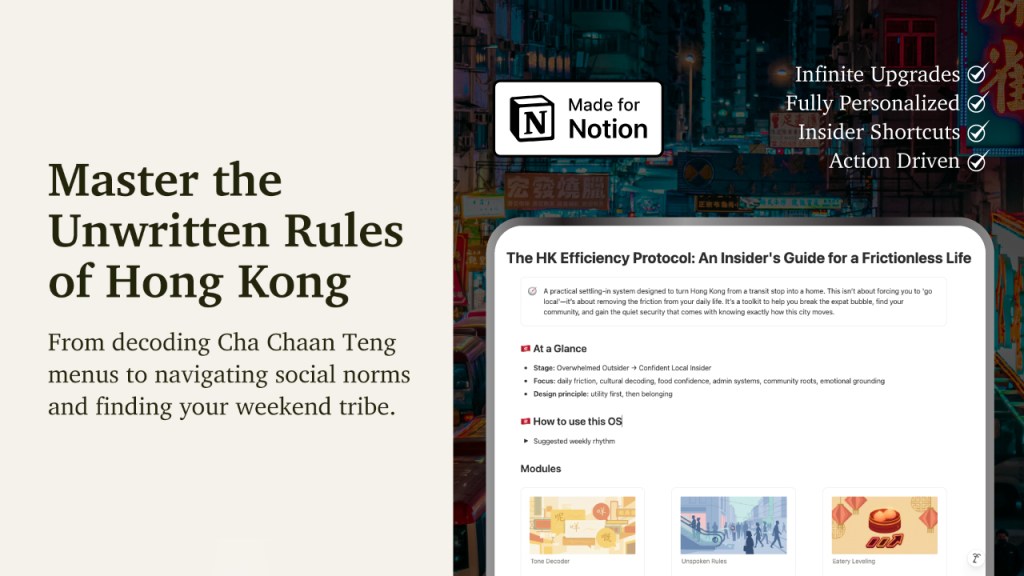
Instead of memorizing a textbook, you just need a reliable system. If you want to bypass the “foreigner wall” and navigate daily interactions with zero friction, I built The HK Efficiency Protocol. It is a comprehensive Notion OS featuring native audio guides, Cha Chaan Teng ordering formulas, and cultural trackers designed to save you 100+ hours of trial and error. Unlock the full system here: https://lifeleverage33.gumroad.com/l/mnuhp
About the Author / Local Insight
Hi, I’m the creator behind 33 Lab! As a Hong Kong local, I know firsthand that this fast-paced city can feel intimidating to newcomers. I created 33 Lab because I saw too many expats mistaking our high-energy, direct communication style for unfriendliness.
My mission is to help you skip the culture shock, decode the local lifestyle, and discover the genuine warmth of the Hong Kong people. Visit 33-lab.com for more cultural guides and tips on navigating the city like a true local!
 33 Lab
Leave a comment