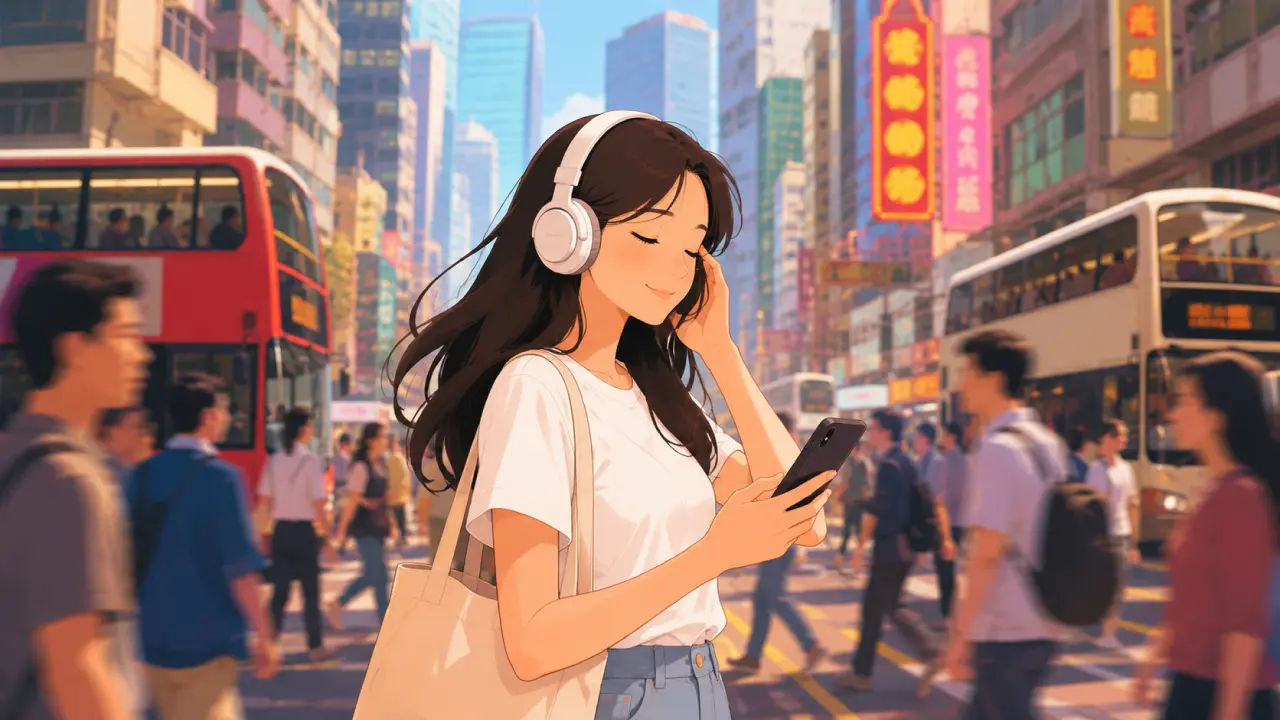
The Ultimate Guide to Cantonese Songs: Unveiling the Soul of Hong Kong’s Music Landscape
When exploring the vibrant cultural tapestry of Hong Kong, nothing captures the city’s heartbeat quite like Cantonese songs. Whether you are strolling through the neon-lit streets of Mong Kok, riding a ding-ding tram across Hong Kong Island, or sitting in a late-night cha chaan teng, the melodies of Cantopop are everywhere. For decades, Cantonese songs have been more than just background music; they are the emotional chronicles of a city caught between the East and the West, tradition and modernity. In this comprehensive guide, we will dive deep into the rich landscape, the fascinating linguistic mechanics, the legendary figures, and the unstoppable evolution of Hong Kong’s signature musical genre.

The Landscape and Genres of Cantonese Songs
The term “Cantonese songs” is often used interchangeably with “Cantopop,” but the musical landscape of Hong Kong is vastly more diverse than standard pop ballads. While mainstream Cantopop—characterized by sweeping string arrangements, piano-driven melodies, and dramatic vocal performances—dominates the airwaves and karaoke boxes, other genres have steadily carved out their own spaces.
In recent years, we have seen a significant revival of Hong Kong City Pop. Heavily influenced by the groovy, synth-heavy, and jazz-fusion sounds of the 1980s, modern Hong Kong City Pop brings a nostalgic yet refreshing aesthetic to the contemporary scene. Meanwhile, local hip-hop and R&B have surged in popularity, utilizing the percussive and rhythmic nature of the Cantonese language to create razor-sharp flows. The indie rock and folk scenes are also thriving, pushing the boundaries of what Cantonese songs can sound like by experimenting with lo-fi beats, electronic soundscapes, and raw, acoustic arrangements. Today, the landscape is a melting pot, proving that Cantonese music is highly adaptable and constantly evolving.
The History and Development of Cantopop
Before the 1970s: Cantonese Opera and Working-Class Tunes
To fully appreciate the evolution of Cantonese songs, we must look back to the era before the 1970s. During this time, the Hong Kong music scene was fiercely divided by class and language. High-end nightclubs, ballrooms, and mainstream radio stations were completely dominated by Western English pop and Mandarin shidaiqu (era songs) brought over from Shanghai and Taiwan.
The Cantonese music that did exist primarily consisted of traditional Cantonese opera and comedic, highly colloquial ditties featured in black-and-white Cantonese movies (粵語長片). Singers like Tang Kee-chan and Cheng Kwan-min produced tunes that resonated deeply with the grassroots working class but lacked mainstream commercial respectability.
The 1970s: The Rise of TV Theme Songs and Sam Hui
The pivotal turning point arrived in the early 1970s with the rise of free-to-air television (TVB). Martial arts dramas and soap operas began broadcasting theme songs in Cantonese. Tracks like Sandra Lang’s “The Fatal Irony” (啼笑因緣) in 1974, composed by Joseph Koo, proved that Cantonese lyrics could be poetic, elegant, and culturally resonant. This television revolution legitimized the language in pop music. Pioneers like Roman Tam (羅文), Sandra Lang (仙杜拉), and Josephine Siao (蕭芳芳) began breaking these class barriers. Through iconic TVB television drama theme songs.
Riding this wave, Sam Hui (often hailed as the “God of Cantopop”) truly ignited the local pop industry. He began writing and performing acoustic pop songs in colloquial Cantonese, brilliantly blending Western musical arrangements with local slang and philosophical reflections on working-class life. His work bridged the gap between grassroots culture and mainstream entertainment, setting the foundational template for modern Cantopop.
Want to learn Cantonese throught Cantonese Songs? You might also like:
The 1980s: The Unstoppable Golden Era
If the 70s laid the foundation, the 1980s built the empire. By the 80s, Cantopop had reached its absolute zenith, establishing what is universally known as the Golden Era.
During this vibrant decade, superstars like Leslie Cheung, Anita Mui, and Alan Tam became cultural icons not just in Hong Kong, but across the global Chinese diaspora. The industry evolved rapidly: production values skyrocketed, extravagant concerts at the newly opened Hong Kong Coliseum became legendary spectacles, and the music business transformed into a highly lucrative, multi-million dollar powerhouse. 80s Cantopop was defined by its glitz, glamour, and an undeniable sense of optimism that perfectly mirrored Hong Kong’s rapid economic boom as an Asian Tiger.
Interested in Hong Kong music golden era? You might also like:
The Influence of English and Japanese Music
The DNA of Cantonese songs is deeply intertwined with international influences. In its formative years, the industry relied heavily on the influence of English music, with many early Cantopop tracks beginning as localized covers of Western hits. However, the most profound external impact during the Golden Era came from Japanese music.
Many of the biggest hits in 80s and 90s Cantopop were actually covers of Japanese City Pop, rock, and idol songs. Melodies originally performed by Japanese legends like Koji Tamaki, Akina Nakamori, and Mayumi Itsuwa were purchased, re-arranged, and outfitted with new Cantonese lyrics. This cross-cultural exchange helped rapidly expand the repertoire of Hong Kong singers, blending Japanese melodic sensibilities with the unique tonal qualities of the Cantonese language.
The 90s to Millennium: Kings, Queens, and Youth Anthems
As the Golden Era transitioned into the 1990s, the industry was famously dominated by the Four Heavenly Kings (Jacky Cheung, Andy Lau, Leon Lai, Aaron Kwok). However, the real thematic shift occurred at the turn of the millennium. The 2000s introduced a new generation of undisputed royalty who fundamentally modernized the sound of Cantopop. Eason Chan emerged as the undisputed “God of Songs” for the new era, renowned for his vocal versatility and ability to convey raw, complex emotions. Alongside him, Joey Yung cemented her status as the ultimate Queen of Pop, breaking industry records with her powerhouse vocals and commanding stage presence.
This era also saw the massive explosion of youth pop culture, defined brilliantly by the idol duo Twins. Their catchy, school-girl anthems became the universal soundtrack for a generation of students, shifting the industry focus toward younger demographics. Concurrently, exceptional talents like Hins Cheung (張敬軒) entered the scene. Bringing sophisticated R&B arrangements, classical training, and breathtaking vocal range, Hins Cheung elevated the musicality of Cantopop and remains a monumental figure in the industry today. This millennium era solidified the emotional and youthful core of Hong Kong music before the digital streaming age took over.
The Rise of Kpop and Its Impact on Hong Kong
As we moved into the 2000s and 2010s, the global explosion of Kpop dramatically altered the landscape of the Asian music market. The slick production, rigorous idol training systems, and highly synchronized choreography of Kpop captured the attention of Hong Kong youth, temporarily overshadowing local Cantonese songs.
However, rather than spelling the end of Cantopop, the influence of Kpop acted as a catalyst for evolution. The Hong Kong music industry absorbed the lessons of Kpop’s visual and marketing strategies, sparking an internal transformation that paved the way for the next big era in local music.
The Modern Era: The Idol Wave and Solo Powerhouses
In recent years, the Hong Kong music scene has experienced a massive renaissance, largely driven by the phenomenon of the local “Idol Wave.” Groups like MIRROR and COLLAR have reignited a passionate, city-wide fandom culture that echoes the Golden Era but with a modern, high-energy twist. Their emergence created an unprecedented surge in local pride and mainstream engagement.
To understand the beginning of this Hong Kong Idol Wave, you might also like:
However, the current landscape is not solely dominated by idol groups. A new generation of incredibly talented solo artists has emerged, renowned for their vocal prowess, deep musicality, and distinct personalities. Artists such as MC Cheung (張天賦), AGA, Jay Fung, Panther Chan and singer-songwriter Terence Lam have consistently topped the charts. They provide a perfect balance to the dance-heavy idol groups, proving that top-tier vocalists and creative solo acts still command a massive, loyal audience in Hong Kong.
The Linguistic Magic: Jyutping, Pitch Contour, and Tonal Alignment
What makes composing Cantonese songs uniquely difficult compared to English or Mandarin? The answer lies in linguistics. Cantonese is a complex tonal language featuring up to nine distinct tones (or six contrastive contours). To accurately pronounce and study these sounds, linguists and learners rely heavily on Jyutping, the standard romanization system for Cantonese.
Because of this tonal nature, songwriters must adhere to strict rules of Pitch Contour and Tonal Alignment (known locally as “hip jam” or 協音). If a musical melody rises in pitch, the lyrical word assigned to that note must also be a high-tone word. If a lyricist ignores tonal alignment, the singer will sound completely off-key, and more dangerously, the words will change meaning entirely. A poorly aligned lyric can easily turn a romantic phrase into unintentional profanity or gibberish. This mathematical precision is what makes writing Cantonese songs a highly respected craft; it is a delicate dance between musicality and strict phonetic rules.
Lyrics Matter: The Soul of Cantonese Songs
If melody is the body of Cantopop, the lyrics are its absolute soul. In Hong Kong music culture, listeners place an incredibly high premium on lyrical meaning. A song with an average melody but masterful lyrics can easily become a timeless classic. This emphasis on poetic depth has elevated lyricists to a celebrity status rarely seen in other music industries around the world.
Standard Written Chinese vs. Spoken Cantonese
A fascinating dichotomy within Cantonese songs is the usage of Standard Written Chinese versus Spoken Cantonese. Historically, the vast majority of Cantopop lyrics have been written using Standard Written Chinese. This means the grammar and vocabulary resemble written Mandarin (e.g., using “是” for “is” instead of the spoken “係”, or “的” instead of “嘅”). This convention was established to make the lyrics read like formal poetry and to maintain a sense of literary elegance.
However, as local identity has strengthened, a growing number of indie bands, hip-hop artists, and even mainstream pop stars have started embracing Spoken Cantonese in their lyrics. Using the raw, colloquial language heard on the streets of Hong Kong adds a layer of authenticity, intimacy, and grit that Standard Written Chinese sometimes lacks. It bridges the gap between the performer and the everyday listener.
Themes Beyond Romance: Philosophy and Self-Love
While traditional Cantopop is heavily associated with heartbreaking love ballads, the thematic scope of modern Cantonese lyrics has expanded exponentially. Today, audiences crave depth, leading to a surge in songs exploring philosophy, mental health, and self-love.
Artists like Juno Mak are renowned for pushing boundaries with dark, highly conceptual, and philosophically dense album projects that demand active interpretation. Charmaine Fong has become a beacon for songs focusing on self-care, emotional healing, and personal resilience. Similarly, contemporary stars like Jace Chan and Terence Lam frequently release tracks that are introspective and thought-provoking. Their lyrics encourage listeners to embrace their individuality, navigate the complexities of adulthood, and find inner peace rather than merely mourning a lost romance.
Legendary Lyricists: Albert Leung and Wyman Wong
You cannot discuss the literary depth of Cantonese songs without mentioning the undisputed titans of the industry: 林夕(Albert Leung) and Wyman Wong. Known collectively as the “Two Waimans” (as Albert Leung’s real name is also Wai-man), these two masterminds have practically shaped the emotional vocabulary of Hong Kong over the past three decades.
Albert Leung is renowned for his philosophical, Buddhist-inspired verses. His lyrics often explore the transient nature of love, existential melancholy, and letting go. He writes with a poetic fluidity that feels timeless. In contrast, Wyman Wong is the sharp, witty observer of modern urban life. His lyrics are characterized by clever wordplay, dark humor, and striking metaphors often drawn from fashion, pop culture, and daily neuroses. Together, they have ensured that Cantonese songs are not just heard, but deeply felt and studied.
Iconic Singers, Indie Voices, and Unforgettable Anthems
Mainstream Legends and KTV Classics
Hong Kong’s music history is defined by singers that absolutely everyone knows. From the legendary Four Heavenly Kings (Jacky Cheung, Andy Lau, Leon Lai, Aaron Kwok) who ruled the 1990s, to era-defining icons like Eason Chan and Joey Yung, these artists have produced a staggering number of household hits.
Many of these hit songs are fundamentally shaped by KTV (karaoke) culture. In Hong Kong, spending hours in a private KTV room with friends is a rite of passage. Therefore, the industry developed a highly successful formula to produce “K-songs” (K歌)—melodic ballads with dramatic emotional arcs, accessible vocal ranges, and explosive choruses specifically designed for everyday people to belt out while looking at a screen.
Far from being a relic of the past, K-songs still heavily dominate the mainstream Hong Kong music landscape today. Even as the local industry expands into diverse sub-genres like hip-hop, R&B, and electronic pop, the traditional emotional ballad remains an absolute commercial powerhouse.
In fact, no matter how experimental or alternative an artist’s signature style might be, almost every contemporary singer in Hong Kong will eventually release an undeniable K-song. Crafting a relatable, high-emotion ballad remains a vital strategy for mass appeal; it bridges the gap between niche credibility and mainstream stardom. Whether it is a rising solo powerhouse or a seasoned pop group, releasing a K-song ensures high rotation in karaoke lounges, top-tier streaming playlists, and local radio stations. These KTV classics are deeply embedded in the social fabric of the city, serving as the ultimate emotional release for generations of Hongkongers.
The Indie Scene: My Little Airport and Beyond
Beyond the glitz of mainstream arenas lies a fiercely independent music scene. At the forefront of this movement is My Little Airport, an iconic indie pop duo known for their lo-fi aesthetics, Casio synthesizer beats, and deadpan vocals. What makes My Little Airport legendary is their unapologetic use of Spoken Cantonese, Standard Written Chinese and English code-mixing to sing about the mundane realities of Hong Kong youth—ranging from low-paying jobs and cramped apartments to subtle political critiques. They represent the alternative voice of a generation, proving that Cantonese songs don’t need million-dollar productions to resonate deeply with the masses.
Beyond Cantonese: English and Mandarin Songs in Hong Kong
While Cantonese songs are the lifeblood of Hong Kong’s music scene, the city’s cosmopolitan nature means it is far from a monolingual market. Hong Kong has a rich history of English and Mandarin music. During the 1960s and 70s, English pop bands were the trendsetters among the youth. Today, many local artists release English singles to reach international audiences, while underground hip-hop and R&B acts frequently code-switch seamlessly between Cantonese and English.
Similarly, Mandarin songs hold a massive presence. Because Taiwan and Mainland China represent massive commercial markets, almost all top-tier Hong Kong singers have recorded Mandarin albums throughout their careers. Furthermore, Mandopop artists from Taiwan and China frequently top the charts in Hong Kong, reflecting the city’s bilingual capabilities and its position as a cultural crossroads.
Circulation and the Future of Cantonese Music: A Broader Spectrum
The circulation of Cantonese songs has experienced massive shifts over the decades. In the 80s and 90s, Cantopop was the dominant pop culture export across Asia. Today, the primary vehicle for circulation is digital streaming platforms like Spotify, KKBOX, and Apple Music, alongside YouTube for music videos.
Looking toward the future, the development of Cantonese music is rapidly moving away from the confines of the traditional “K-song” ballad. The musical spectrum is now broader than ever, seamlessly embracing R&B, indie-pop, electronic, and alternative genres. Artists such as Terence Lam, Jace Chan, Moon Tang, Marf Yau, and Serrini are actively breaking the mold. They refuse to follow the standard melancholic pop route; instead, their music is quirky, experimental, and unapologetically personal.
Furthermore, the future points toward a greater acceptance and normalization of Spoken Cantonese in mainstream lyrics. The gritty, conversational tone of spoken language allows for a more direct, authentic connection with the local youth, proving that Cantopop can be both culturally grounded and relentlessly innovative. As this diverse new generation of artists continues to redefine the genre, the future of Cantonese songs looks exceptionally bright, expansive, and enduring.
FAQs about Cantonese Songs

Do locals still listen to Cantopop? Is it just for cultural preservation, or is it an active pop culture?
It is absolutely an active, widely circulating pop culture! While there is an element of cultural preservation among the diaspora, Cantopop remains the dominant soundtrack of everyday life in Hong Kong. The recent “Idol Wave” and the rise of diverse indie and solo artists prove that it is a living, evolving genre that deeply resonates with the current generation.
Why are Cantonese lyrics considered so important?
In Cantopop, lyrics are the soul of the music. Because Cantonese is a tonal language, lyricists must navigate strict “Tonal Alignment” (Pitch Contour) rules, making the writing process technically demanding. Beyond technical mastery, Hong Kong listeners highly value poetic depth, authenticity, and meaningful themes ranging from philosophy to self-love, which elevates top lyricists to celebrity status.
How and where can I listen to Cantopop?
You can easily explore Cantonese songs on major global streaming platforms like Spotify, Apple Music, and YouTube. For a more localized and comprehensive library, KKBOX is highly recommended. To experience the culture authentically, visiting a KTV (karaoke) lounge in Hong Kong, catching a gig at an indie livehouse, or attending a major concert at the Hong Kong Coliseum is the ultimate way to dive in!
How can I master all these unspoken HK social codes without getting overwhelmed?

Instead of memorizing a textbook, you just need a reliable system. If you want to bypass the “foreigner wall” and navigate daily interactions with zero friction, I built The HK Efficiency Protocol. It is a comprehensive Notion OS featuring native audio guides, Cha Chaan Teng ordering formulas, and cultural trackers designed to save you 100+ hours of trial and error. Unlock the full system here: https://lifeleverage33.gumroad.com/l/mnuhp
About the Author / Local Insight
Hi, I’m the creator behind 33 Lab! As a Hong Kong local, I know firsthand that this fast-paced city can feel intimidating to newcomers. I created 33 Lab because I saw too many expats mistaking our high-energy, direct communication style for unfriendliness.
My mission is to help you skip the culture shock, decode the local lifestyle, and discover the genuine warmth of the Hong Kong people. Visit 33-lab.com for more cultural guides and tips on navigating the city like a true local!
Learn More About the Languages of Hong Kong
Browse the complete Hong Kong Languages Guide!


Leave a Reply