The Heart of Buddhist Vegetarian in Hong Kong: A Spiritual Culinary Journey

If you are exploring a Buddhist vegetarian Hong Kong experience, you are diving into a practice deeply rooted in spiritual cleansing, karma, and mindfulness, rather than just modern dietary trends. At its core, this traditional diet is a purification diet designed to align the body and mind with Buddhist principles. Unlike Western veganism, a strict Buddhist vegetarian diet specifically excludes the “five pungent spices” (onions, garlic, scallions, chives, and leeks), making it a unique no garlic no onion vegetarian culinary tradition. Whether you are a traveler looking for authentic temple food or a local exploring flexitarianism, understanding this cultural staple unveils a fascinating side of Hong Kong.
Veganism vs. Vegetarian vs. Buddhist Vegetarian in Hong Kong
To truly appreciate the local food culture, it is crucial to understand the distinct differences between Western plant-based food concepts and traditional Hong Kong terminology.
| Concept | What to Avoid | Principles | Where to Eat |
|---|---|---|---|
| Western Vegan | All animal products (meat, dairy, honey, eggs).*Garlic and onions are allowed. | Ethical concerns for animal rights and environmental sustainability. | Western vegan cafes, modern plant-based restaurants. |
| Vegetarian | Meat. Highly adaptable; some may consume dairy or eggs based on personal flexitarian habits. | Health, environmental reasons, modern flexitarianism. No strict religious adherence. | General vegetarian eateries, regular restaurants with green menus. |
| Buddhist Vegetarian | All animal-derived products that involve killing (including hidden ingredients like chicken powder and gelatin) AND the “five pungent spices” (onions, garlic, scallions, chives, leeks). *Note: Eggs and dairy are controversial as they don’t involve direct killing, but most practitioners tend to avoid them. | Buddhist purification diet. Believes pungent spices incite anger/passion and hinder spiritual meditation. | Traditional Buddhist temples (e.g., Po Lin Monastery), traditional 齋 (Jai/Chai/Zhai) restaurants. |
Why Do Hong Kongers Eat Buddhist Vegetarian

Traditionally, the practice involved observing a Buddhist vegetarian diet on the 1st and 15th days of the lunar month as an act of accumulating good karma and showing compassion to all living beings. While very few everyday people in modern-day Hong Kong strictly follow this routine, locals still embrace Buddhist vegetarianism in several meaningful ways:
- Community Empathy & Good Deeds: During major societal tragedies, ordinary citizens spontaneously adopt temporary vegetarian fasts. This collective act generates positive karma and prays for the victims, showcasing Buddhist Vegetarian as a powerful expression of communal solidarity.
- Filial Piety & Mourning: Families often eat vegetarian meals after a loved one passes to dedicate merit to their ancestors. Today, it is more about the sincere, symbolic gesture of honoring the departed than rigid dietary adherence.
- Festive Traditions: Rather than eating vegetarian on fixed lunar dates every month, the general public prefers to eat vegetarian for a day or two during major festivals and the Lunar New Year. It remains a seasonal way to accumulate blessings, practice compassion, and reset the body.
Want to know more about the traditional vegetarian mock meats in Hong Kong?
- You might also like: Hong Kong Traditional Vegetarian Fake Meat: A Bizarrely Authentic Heritage Hidden in Plain Sight
Experiencing the Buddhist Vegetarian Culture in Hong Kong
One of the most spectacular ways for locals and foreigners alike to experience this culture is through traditional festivals. The most famous example is the Cheung Chau Da Jiu Festival (also known as the Cheung Chau Bun Festival), commonly known as the Cheung Chau Bun Festival. As the festival is set in the fourth month of the Lunar Calendar, it falls on different dates every year on the regular Gregorian calendar. Make sure to double-check and confirm the exact dates before planning your trip to join the festivities.

During this week-long celebration, the entire island undergoes an island-wide vegetarian fast. The dedication to this purification diet is so profound that even international fast-food chains participate in McDonald’s localization. You will find the exclusive “McVeggie Cheung Chau” menu, where the entire branch halts meat production and serves only vegetarian options.
The highlight of the festival is the distribution of Peace Buns (Ping On Bun). These sweet, stamped buns are entirely plant-based and are believed to bring health and good fortune to those who consume them, perfectly showcasing how religious devotion shapes community-wide culinary habits.
Where to Find Authentic Temple Food and Mock Meat in HK
For those eager to experience Buddhist vegetarian food firsthand, Hong Kong offers incredible avenues, ranging from serene monasteries to bustling local eateries.
A cornerstone of this cuisine is Buddhist imitation meat. Long before modern plant-based food science, Chinese monks mastered the art of creating mock meat HK style. Utilizing traditional gluten meat, tofu skin, and mushrooms, chefs recreate the textures and flavors of pork, chicken, and seafood. A must-try classic is Buddha’s Delight (Lo Han Jai), a complex and savory vegetable stew packed with symbolic ingredients.

Here are the top locations to experience authentic temple food:
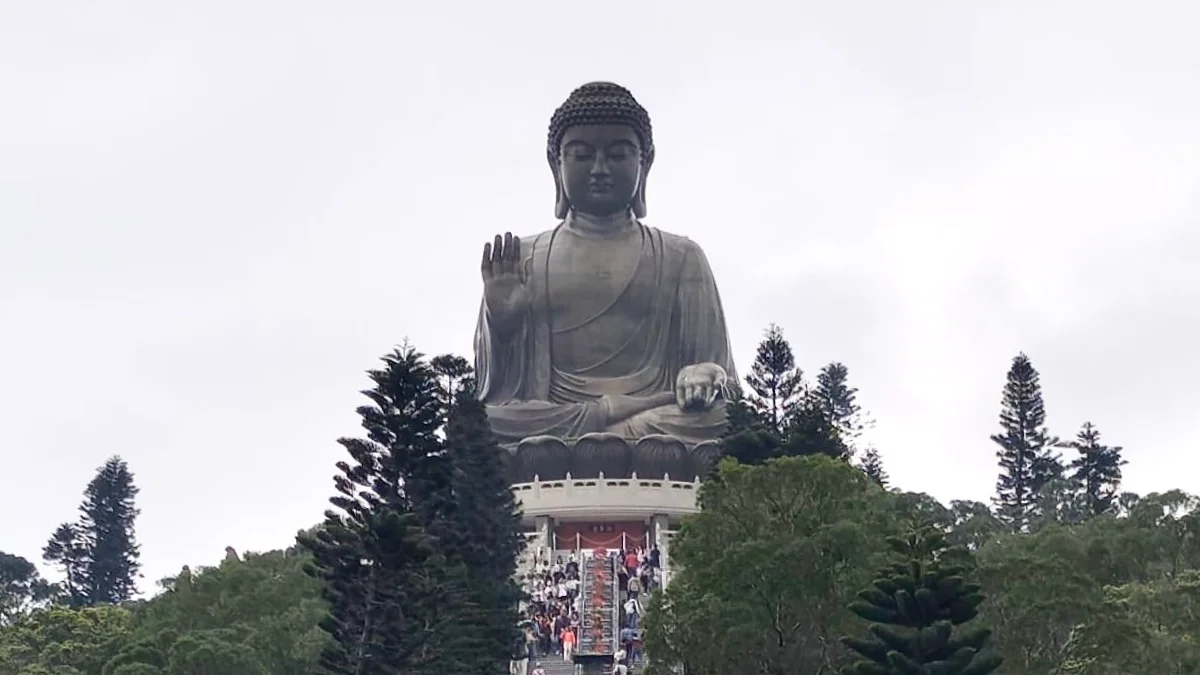
- Po Lin Monastery: Located on Lantau Island near the Big Buddha, offering classic, hearty Buddhist vegetarian meals in a massive dining hall.
- Chi Lin Vegetarian: Situated in Diamond Hill, this Tang-dynasty style architecture houses a highly refined vegetarian restaurant hidden behind a cascading waterfall, focusing on delicate, MSG-free temple food.
- Ching Chon Koon: A serene Taoist complex in Tuen Mun famous for its intricate traditional gluten meat dishes.
- Yuen Yuen Vegetarian Restaurant: Located in Tsuen Wan, this institute provides affordable, comforting vegetarian dishes in a tranquil, hillside setting.
Beyond the formal settings of monasteries, authentic mock meat is deeply embedded in daily local life. You can easily find “Jai Lo Mei” (齋滷味)—traditional vegetarian deli snacks made from marinated and sweet-and-sour gluten—in local wet markets, everyday supermarkets, and scattered throughout neighborhood food stalls. They offer an incredibly convenient and localized way to taste Buddhist vegetarian culture on the go.

For a complete overview of plant-based living in the city, check out our ultimate guide:
FAQs about Buddhist Vegetarianism in Hong Kong

Is it okay for non-Buddhists or tourists to eat Buddhist vegetarian food?
Absolutely! You do not need to be a Buddhist or a local to enjoy Buddhist vegetarian food. Temples and vegetarian restaurants in Hong Kong are extremely welcoming to everyone, regardless of their religious background or nationality. Many tourists and non-Buddhists visit these places simply to appreciate the tranquil atmosphere, admire the culinary artistry of traditional mock meats, or enjoy a healthy cultural experience.
Why do Taoists in Hong Kong also eat Buddhist vegetarian food?
Buddhist Vegetarian has become less of a strict religious identifier and more of a broad culinary category. Also, in Hong Kong culture, religions are heavily blended. The lines between Buddhism, Taoism, and traditional Chinese folk religion are very fluid for the average person. Many locals will pray to Buddha and Wong Tai Sin (a Taoist deity) all in the same week. Because the community practices are so deeply intertwined, the food infrastructure naturally caters to both groups under one unified umbrella.
How often do people in Hong Kong actually eat Buddhist vegetarian food?
For the general public, it is not very common on a daily basis. Most people might eat it for a day or two during the Lunar New Year or on major traditional festivals, or occasionally buy some “Jai Lo Mei” from local vegetarian shops or supermarkets as an extra side dish. Although the tradition of eating vegetarian on the 1st and 15th days of the lunar month is well-known, few modern residents strictly follow it. However, devout individuals and those wishing to accumulate blessings and good karma do maintain a consistent Buddhist vegetarian diet.
What is fake meat in Hong Kong made of?
Traditional fake meat, a staple in Buddhist imitation meat, is made by washing wheat dough until all the starch is removed, leaving only the chewy, protein-rich gluten, which is then shaped, fried, and braised to mimic meat textures.
Traveling to Hong Kong as a Vegan or Vegetarian? Eat with 100% Peace of Mind!

Dining out in Hong Kong can be challenging for vegans and vegetarians. Many traditional local restaurants unknowingly use hidden ingredients like oyster sauce, chicken powder, lard, or fish broth in vegetable dishes. Language barriers can make it even harder to explain your dietary needs to busy waiters.
This Hong Kong Vegan & Vegetarian Survival Card is your ultimate dining savior! Written in authentic, local Cantonese, it communicates your exact dietary restrictions to restaurant staff in just one second—no more miscommunications or accidental “cheating” on your diet!
About the Author / Local Insight
Hi, I’m the creator behind 33 Lab! As a Hong Kong local, I know firsthand that this fast-paced city can feel intimidating to newcomers. I created 33 Lab because I saw too many expats mistaking our high-energy, direct communication style for unfriendliness.
My mission is to help you skip the culture shock, decode the local lifestyle, and discover the genuine warmth of the Hong Kong people. Visit 33-lab.com for more cultural guides and tips on navigating the city like a true local!
Find More Hong Kong Vegetarian Food
Browse the complete Hong Kong Vegetarian Food Guide collection!


Leave a Reply