Navigating the Hong Kong Vegetarian Hidden Ingredients: Avoid the Ultimate Trap

If you are wondering what the biggest challenge for a plant-based diet in the city is, it is undoubtedly the Hong Kong vegetarian hidden ingredients that sneak into seemingly meat-free dishes. From casual local diners to traditional banquet halls, unsuspecting diners frequently fall into a major Hong Kong vegetarian trap. This guide will expose the most common hidden animal products, explain why they are ingrained in local culinary practices, and help you navigate local menus with absolute confidence.
The Common Culprits: Top Hong Kong Vegetarian Hidden Ingredients
Cantonese cooking places a heavy emphasis on deep, savory flavors (umami). Unfortunately for plant-based eaters, this flavor profile is historically achieved using animal-based fats, seasonings, and broths. Here are the main ingredients you need to watch out for.
1. Lard (豬油): The Invisible Fat
Lard has long been a staple in Chinese baking and cooking for its ability to create unparalleled flakiness in pastries and a rich aroma in stir-fries. While modern health trends have reduced its usage, it still lurks in traditional Chinese pastries (like wife cakes and mooncakes), pan-fried buns, and some older, traditional Dai Pai Dongs (open-air food stalls) where it is used to fry noodles or vegetables for extra flavor.

2. Chicken Powder (雞粉): The Default Seasoning
Chicken powder is perhaps the most difficult ingredient to avoid. In many local kitchens, it functions as a basic salt replacement or an MSG alternative to instantly boost umami. The problem? Most line cooks treat it as a universal seasoning rather than a meat product. They often do not pause to consider if a dish seasoned with chicken powder is still vegetarian. It can be found in everything from fried rice to braised tofu.
3. Superior Broth (上湯): The Vegetable Deception
Many vegetarians assume that ordering a plate of boiled or stir-fried greens is a safe bet. However, in Hong Kong, vegetable dishes like “Vegetables in Broth” (上湯浸菜) use a stock made from boiling pork bones, chicken, and sometimes dried shrimp for hours. Even plain stir-fried vegetables might be quickly blanched in this master broth before hitting the wok.

4. Oyster Sauce (蠔油) and Worcestershire Sauce (喼汁)
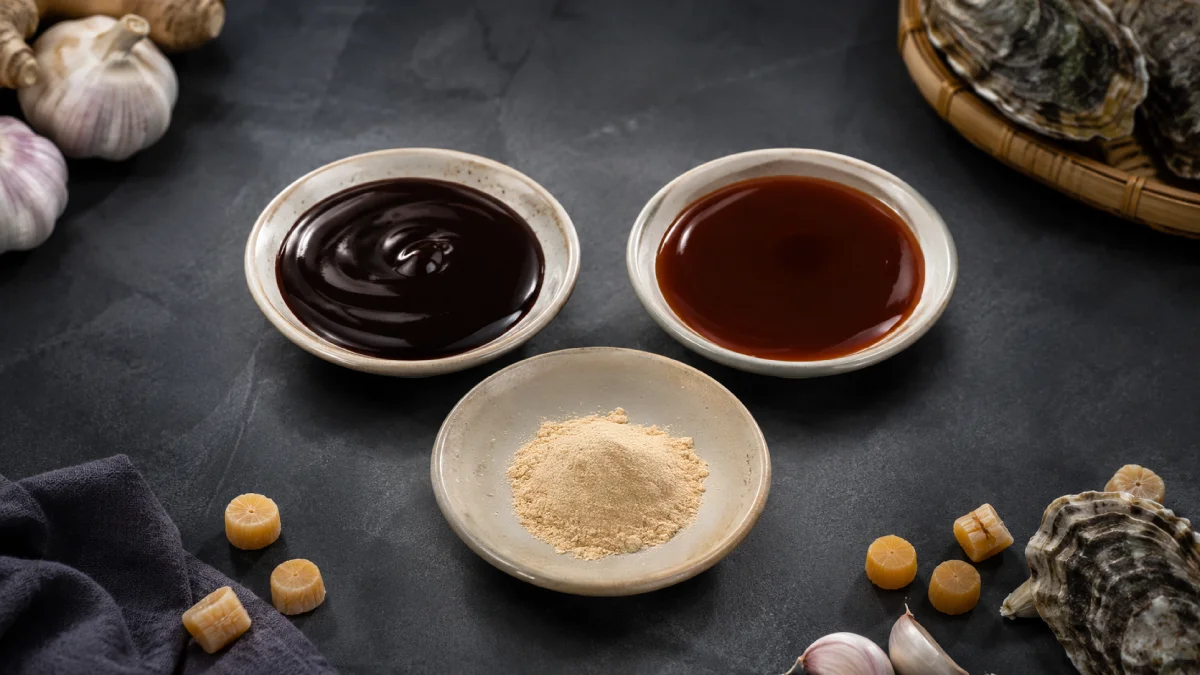
Oyster sauce, made from oyster extracts, is ubiquitous in stir-fries and as a topping for boiled vegetables (油菜). Furthermore, the local version of Worcestershire sauce (喼汁), commonly served with spring rolls and dim sum, often contains anchovies. These condiments easily slip under the radar of tourists and expats.

Service Culture and Communication Barriers
The fast-paced nature of Hong Kong’s dining scene creates a high wall of communication. Waitstaff in bustling Cha Chaan Tengs are focused on efficiency. Asking detailed questions about the ingredients of a dish can lead to impatience or misunderstandings. Additionally, the definition of “vegetarian” varies widely; some local staff consider a dish vegetarian as long as there are no visible chunks of meat, completely ignoring meat-based broths or fats.
Missing Labels and Menu Opacity
Unlike Western countries where allergens and dietary labels (V, VG, GF) are standard practice, many traditional Hong Kong restaurants lack this transparency. A menu item might be listed simply as ‘Turnip/Radish Cake,’ while the description completely omits the dried shrimp, Chinese sausage, and cured pork hidden inside. The lack of standardized vegetarian labeling makes dining out a constant guessing game.

The Safest Strategies for Vegetarians in Hong Kong
- Visit Dedicated Vegetarian Restaurants: The absolute safest strategy is to dine at strictly plant-based establishments. Refer to our guide on Hong Kong vegetarian restaurant types for the best options.
- Embrace Traditional “Jai” (齋): If you want a foolproof local experience, look for traditional Buddhist vegetarian shops. Because these venues strictly adhere to religious guidelines, you never have to worry about hidden lard or meat broths. They are also famous for their unique, heritage-style plant-based meats. Learn more about this fascinating culinary tradition in: Hong Kong Traditional Vegetarian Fake Meat: A Bizarrely Authentic Heritage Hidden in Plain Sight
- Navigating Non-Vegetarian Restaurants: If you find yourself at a standard eatery, stick to dishes that are inherently safer. Read our recommendations for must-try vegetarian dishes in Hong Kong to know what to order.
- Dim Sum Dilemmas: Traditional tea houses are notorious for hidden ingredients. Be well-prepared by consulting our vegetarian dim sum Hong Kong guide before you go.
For a complete overview of plant-based living in the city, check out our ultimate:
- You might also like: Hong Kong Vegetarian Food Survival Guide.
FAQs about Hong Kong Vegetarian Hidden Ingredients Trap

Is it 100% safe to order a plain vegetable stir-fry in a local restaurant?
Not always. Even simple vegetable dishes are often blanched in meat broth or seasoned with chicken powder. Always specify that you need it cooked in plain water with basic salt and soy sauce, and explicitly say “no chicken powder or oyster sauce.”
How do I communicate my dietary needs effectively to local waiters?
Keep it simple and direct. Instead of just saying “I am a vegetarian,” say “I cannot eat any meat, pork lard, chicken powder, or meat broth.
Are traditional Hong Kong desserts safe for vegetarians?
Not necessarily. While liquid sweet soups are usually safe, traditional baked pastries often use lard to create a flaky crust. Always confirm the ingredients before ordering.
Will restaurants secretly sneak in ingredients like shrimp paste, dried shrimp, or salted fish?
Generally, no. These items are considered relatively expensive ingredients with strong, distinct flavors. If a restaurant includes them in a dish, they will almost always proudly highlight it on the menu to justify the price and attract customers, rather than hiding it as a secret ingredient.
Traveling to Hong Kong as a Vegan or Vegetarian? Eat with 100% Peace of Mind!

Dining out in Hong Kong can be challenging for vegans and vegetarians. Many traditional local restaurants unknowingly use hidden ingredients like oyster sauce, chicken powder, lard, or fish broth in vegetable dishes. Language barriers can make it even harder to explain your dietary needs to busy waiters.
This Hong Kong Vegan & Vegetarian Survival Card is your ultimate dining savior! Written in authentic, local Cantonese, it communicates your exact dietary restrictions to restaurant staff in just one second—no more miscommunications or accidental “cheating” on your diet!
About the Author / Local Insight
Hi, I’m the creator behind 33 Lab! As a Hong Kong local, I know firsthand that this fast-paced city can feel intimidating to newcomers. I created 33 Lab because I saw too many expats mistaking our high-energy, direct communication style for unfriendliness.
My mission is to help you skip the culture shock, decode the local lifestyle, and discover the genuine warmth of the Hong Kong people. Visit 33-lab.com for more cultural guides and tips on navigating the city like a true local!
Find More Hong Kong Vegetarian Food
Browse the complete Hong Kong Vegetarian Food Guide collection!


Leave a Reply