
Must Try Vegetarian Dishes in Hong Kong: A Local’s Menu of Meatless Classics
If you are looking for the must try vegetarian dishes Hong Kong locals swear by, you don’t always need to visit a dedicated vegan restaurant. Surprisingly, the most authentic meatless Cantonese food is often found in bustling Dai Pai Dongs, neighborhood Cha Chaan Tengs, and traditional banquet halls. These plant-based menus are so flavorful that even meat-lovers order them regularly. Here is your definitive guide to navigating the local vegetarian scene like a pro.
10 Must Try Vegetarian Dishes in Hong Kong
1. Golden Brick Tofu (金磚豆腐)
Contains Egg. These are bite-sized, rectangular blocks of tofu coated in a thin egg-wash batter and fried.

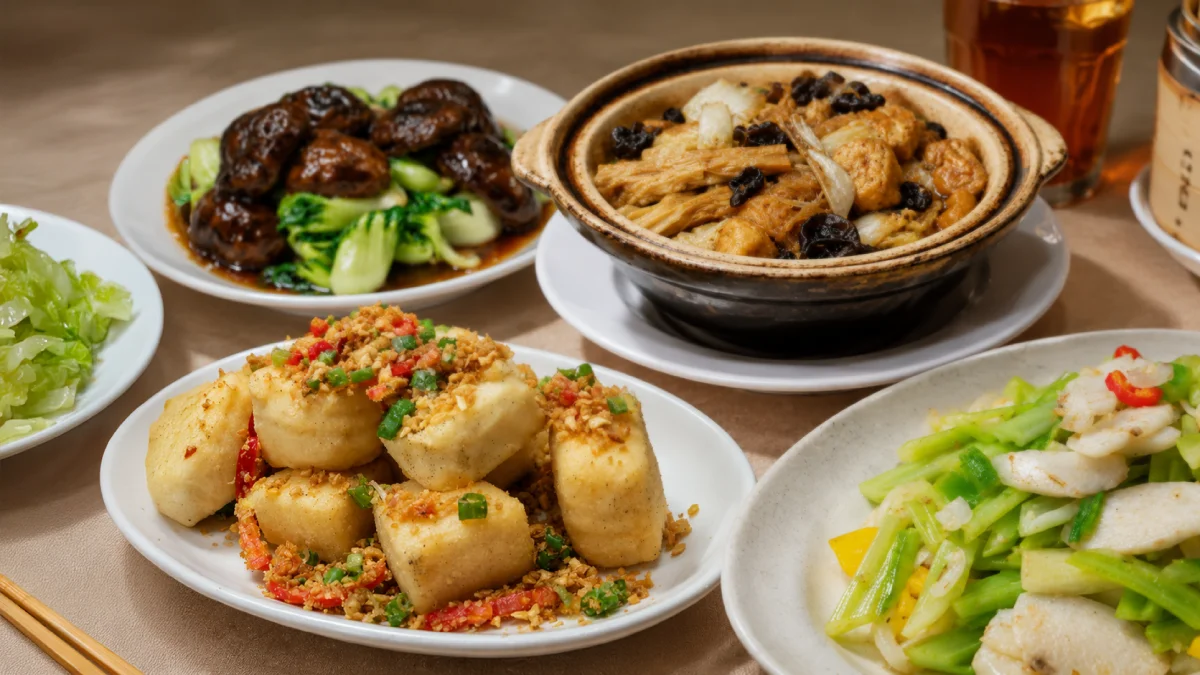
2. Salt and Pepper Tofu / Corn (椒鹽豆腐/椒鹽栗米)
Tofu cubes or corn ribs are deep-fried until golden and tossed with a savory mix of fried garlic, fresh chili, and spiced salt. It is crunchy and addictive.

Difference between Golden Brick and Salt & Pepper Tofu: While Salt & Pepper Tofu is usually and dry-seasoned with heavy garlic/chili, Golden Brick Tofu focuses on the texture—a crisp egg-crust on the outside and an incredibly soft, custard-like interior, often served with a light dipping salt or sauce.
3. Buddha’s Delight Casserole (南乳粗齋煲)
The king of traditional vegetarian stews. It uses fermented red bean curd (Nam Yu) as a savory base to braise glass noodles, wood ear mushrooms, dried beancurd skin, and various root vegetables. It is rich, aromatic, and deeply satisfying.

4. Deep-fried Bitter Melon with Salted Egg Yolk (鹹蛋炸苦瓜)
Contains Egg. A sensational dish that perfectly balances contrasting flavors. Thin slices of bitter melon are lightly battered and deep-fried to crispy perfection, then coated in a rich, creamy, and savory melted salted egg yolk sauce. The rich umami of the egg yolk beautifully masks the sharp bitterness, making it a crowd favorite even for non-vegetarians.

5. Stir-fried Bok Choy/Pea Shoots with Garlic (蒜蓉炒白菜仔/蒜蓉炒豆苗)
Simple, clean, and essential. Baby Bok Choy/Pea Shoots is sautéed quickly over high heat with a generous amount of minced garlic to retain its natural sweetness and crunch.

6. Lo Hon Jai Fried Noodles or Rice (羅漢齋炒麵/飯)
Noodles contain egg. This medley typically includes mushrooms, baby corn, snow peas, and carrots in a silky brown gravy. While traditionally served over crispy fried egg noodles, it is equally delicious served over steamed white rice.

7. Steamed Luffa with Garlic (蒜蓉蒸勝瓜)
A beautifully light and aromatic dish. Luffa (勝瓜), a tender squash with a subtly sweet flavor, is steamed to retain its moisture and topped with a generous amount of fried and fresh minced garlic, then drizzled with hot oil and soy sauce. It is refreshing and perfectly highlights the natural taste of the vegetable.

8. Stir-fried Celery and Lily Bulbs (西芹百合)
A refreshing and textural dish. Depending on the restaurant, it may include wood ear, cashew nuts, Chinese yam, lotus root, or snap peas. Sometimes, Luffa is used as a substitute for celery to provide a softer, sweeter bite.

9. Braised Tofu with Bamboo Pith (竹笙扒豆腐)
A more “elegant” dish often seen in banquet menus. Deep-fried tofu blocks are smothered in a savory gravy featuring bamboo pith—a delicate, net-like fungus that absorbs the sauce perfectly.

10. Braised Shiitake Mushrooms with Seasonal Vegetables (北菇扒時蔬)
Thick, juicy braised shiitake mushrooms are served over a bed of bright green seasonal vegetables. The mushrooms provide a meaty texture that makes this a favorite for those transitioning to a plant-based diet.

Wondering what the 10 safest vegetarian dim sum in Hong Kong are?
- You might also like: Vegetarian Dim Sum: 10 Best Safe Choices & Worst Hidden Lard Traps in Hong Kong
What are “Seasonal Vegetables” (時菜)?
On many Hong Kong menus, you will see ‘Seasonal Vegetables’ (時菜) instead of a specific name. This simply means the dish varies based on the restaurant’s daily market haul and what is freshest in stock. Common examples include Choy Sum, Bok Choy, Chinese Kale (Gai Lan), or Lettuce. Most of the dishes mentioned above, like the garlic stir-fry or the fermented bean curd style, can be made using the day’s seasonal greens.
The Lard (豬油) Dilemma: Is HK Vegetarian Dishes Truly Vegetarian?
One of the biggest hidden traps for vegetarians in Hong Kong is the use of lard (pork fat) in traditional Chinese cooking. Some Dai Pai Dongs and traditional restaurants prefer using lard for stir-frying because it significantly enhances the aroma and helps achieve that coveted, smoky “Wok Hei”. Crucially, this practice is almost never explicitly stated on the menu.

The Good News: While you cannot physically look into the kitchen to verify if any animal products are cross-contaminating the pans, it is reassuring to know that all 10 dishes recommended in this guide are traditionally prepared without lard (usually utilizing pure vegetable oil instead). However, if you have strict dietary restrictions or want absolute peace of mind, it is always best to double-check with the staff, or skip the stir-fried items entirely and opt for steamed, braised, or deep-fried dishes instead.
Want to discover more hidden ingredients and vegetarian traps in Hong Kong?
- You might also like: EXPOSED: The Hong Kong Vegetarian Hidden Ingredients Trap!
Pro Tips for Dining Out
- Location: These dishes are standard in Dai Pai Dongs, Cha Chaan Teng (dinner service), and Cantonese restaurants (lunch or dinner).
- Verify Ingredients: Although these dishes are traditionally meatless, some local chefs might add minced pork or dried shrimp for extra flavor. Always confirm with the staff: “Is there meat in this?”.
- OpenRice & English Menus: Before you go, check the OpenRice app to see photos and verify if the restaurant has an English menu to avoid any confusion or non-traditional additions of seafood/meat.
Are you looking for vegetarian restaurants in Hong Kong?
- You might also like: Hong Kong Vegetarian Restaurant Guide: Find Your Perfect Dining Type
FAQs About Must Try Vegetarian Dishes in Hong Kong

Are vegetarian dishes in Hong Kong always vegan?
Not always. Golden Brick Tofu, Deep-fried Bitter Melon with Salted Egg Yolk, and some types of noodles contain egg.
Is fermented red bean curd (Nam Yu) vegetarian?
Yes, it is made from fermented soybeans and is a staple flavoring in meatless Cantonese food.
Can I find vegetarian dishes during lunch?
Some vegetarian dishes are available during lunch, especially the Lo Hon Chai dishes and seasonal vegetables, but they are most common during dinner.
For a complete overview of plant-based living in the city, check out our ultimate:
- You might also like: Hong Kong Vegetarian Food Survival Guide.
Traveling to Hong Kong as a Vegan or Vegetarian? Eat with 100% Peace of Mind!

Dining out in Hong Kong can be challenging for vegans and vegetarians. Many traditional local restaurants unknowingly use hidden ingredients like oyster sauce, chicken powder, lard, or fish broth in vegetable dishes. Language barriers can make it even harder to explain your dietary needs to busy waiters.
This Hong Kong Vegan & Vegetarian Survival Card is your ultimate dining savior! Written in authentic, local Cantonese, it communicates your exact dietary restrictions to restaurant staff in just one second—no more miscommunications or accidental “cheating” on your diet!
About the Author / Local Insight
Hi, I’m the creator behind 33 Lab! As a Hong Kong local, I know firsthand that this fast-paced city can feel intimidating to newcomers. I created 33 Lab because I saw too many expats mistaking our high-energy, direct communication style for unfriendliness.
My mission is to help you skip the culture shock, decode the local lifestyle, and discover the genuine warmth of the Hong Kong people. Visit 33-lab.com for more cultural guides and tips on navigating the city like a true local!
Find More Hong Kong Vegetarian Food
Browse the complete Hong Kong Vegetarian Food Guide collection!


Leave a Reply